Importing Aluminum Foil Containers into Southeast Asia
Short answer
Importing empty disposable aluminum foil containers from a China factory into a Southeast Asian destination is a sequence of a written specification, samples, a confirmed order, factory production, and import clearance in the destination country. Each destination has its own official tariff, customs procedure and food-contact rules. This page does not invent an ASEAN-wide duty.
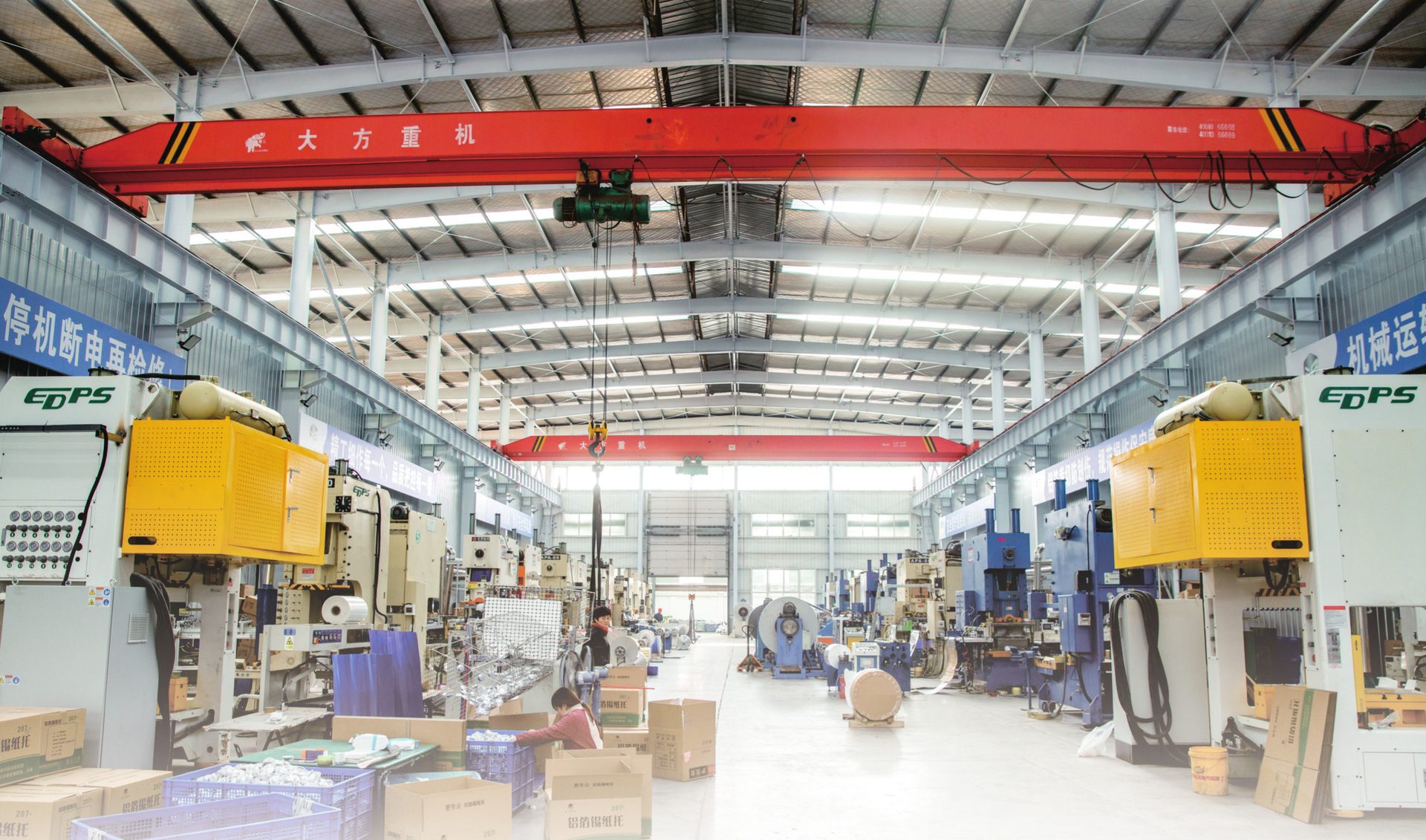
AILVBO is a manufacturer in Gongyi City, Yong'an Subdistrict, Henan Province, China 451200, in production since 2007, with OEM capability and its own import and export rights. Those company facts are already published on the live general import guide.
Published factory terms on that same live page include a 50000-piece MOQ per item (10000-piece trial for new customers), free existing-model samples (the buyer pays freight), FOB Qingdao or Shanghai, T/T (30% deposit, 70% before shipment) or L/C at sight, and 15–20 days after deposit for standard production. Prices are confirmed on the quotation and are not listed on the website. This page does not add payment methods beyond those already published on the live site.
Empty disposable foil pans and trays are often discussed under heading 76.15 of the Harmonized System (table, kitchen or other household articles of aluminium). Heading 76.07 usually describes aluminium foil in a thickness not exceeding 0.2 mm, not a formed tray. Heading 76.12 can also arise for certain aluminium containers. The tariff line that will actually be entered, the duty then in force, any VAT/GST/SST or other official charge, and any trade-remedy measure must be confirmed with your customs broker and, where needed, with the destination customs authority against the official tariff and other laws then in force. This page is not a classification of any AILVBO model. Legal classification remains not independently verified.
For Indonesia only, and only for official tariff code 7615.10.90, an official origin=China reading was completed against the Indonesian Minister of Finance regulation that sets RCEP import duty for goods imported from the People’s Republic of China. The official figures actually read, the lookup date, and the conditions (preference is not automatic) are set out in section 4.1.
For Malaysia, and only for official code 7615.10.90 00, an official origin=China filter was completed. The official general import duty in the Customs Duties Order 2025 is 30%. The official ACFTA preferential rate for goods originating from the People’s Republic of China, for 2025 and subsequent years, is 0%. That 0% is not automatic on a China-factory shipment. The official figures, lookup date and conditions are set out in section 4.2.
For Thailand, and only for official code 7615.10.90 00, an official origin=China filter was completed. The official general import duty in Emergency Decree on Customs Tariff (No. 7) B.E. 2564 is 60% ad valorem. The official ACFTA preferential treatment for goods originating from the People’s Republic of China is ยกเว้นอากร (duty exemption). That exemption is not automatic on a China-factory shipment. The official figures, lookup date and conditions are set out in section 4.3.
For Vietnam, an official origin=China filter was not completed. Duty, VAT and preferential percentages are not independently verified and are omitted.
For Singapore, official tariff pages were opened, but origin=China (or official confirmation that the rate does not vary by origin for heading 7615) was not completed. Duty, “Free,” and GST percentages are not independently verified and are omitted.
ATIGA/ASEAN preference does not automatically apply to a China-origin factory shipment.
1. What to put in the first request
Send a written request through the already-live RFQ checklist or contact page. State at least:
- the destination country (Indonesia, Malaysia, Thailand, Vietnam, Singapore, or another named country — not “Southeast Asia” as a single customs territory);
- the shape, capacity, and whether a lid or coating is required;
- alloy or temper only if you already have a specified requirement; otherwise ask the factory to confirm what it will produce;
- the quantity and the target delivery window;
- packing and shipping marks, and whether you will appoint a destination customs broker;
- the food-contact documents you will need to clear the goods, named as documents to be confirmed against the order, not as website certifications already completed for a named legal instrument.
Do not treat a heading, a model name, or a previous shipment as a classification ruling.
2. Factory terms already published on the live site
The already-live general import guide, and the already-live MOQ, samples, lead-time and packing guides, publish the factory terms summarised in the short answer. Those pages are not rewritten here.
Payment wording stays with the already-published live terms: T/T (30% deposit, 70% before shipment) and L/C at sight.
3. Classification: heading 7615, 7612 or 7607
Official tariff schedules opened for this page describe heading 76.15 as table, kitchen or other household articles and parts thereof, of aluminium, including pot scourers and sanitary ware. In the official Indonesian and Singapore nomenclatures opened for this page, the residual line under 7615.10 for articles other than pot scourers is 7615.10.90. That is a nomenclature fact from those official tables. It is not a ruling that any named AILVBO model must be entered on that line.
Heading 76.12 and heading 76.07 appear in the same official tables. This page does not transfer a foil-roll (7607) measure onto a formed disposable container, and it does not write 7612 or 7607 duty figures in the buyer body. Legal classification of a given shipment remains not independently verified.
4. Official duty figures, country by country
There is no single “Southeast Asia rate.” Each country is treated separately. United States 3.1%, HTSUS 7615.10.7125, United Kingdom or European Union 6.00%, Mexican LIGIE/LIVA figures, Indian tariff/IGST/ADD figures, and Japan Free/無税 or consumption-tax 10%/8% are not written here as rates applicable to any Southeast Asian destination.
4.1 Indonesia — official origin=China reading completed for code 7615.10.90 only
This page opened the official Minister of Finance regulation 224/PMK.010/2022, “Penetapan tarif Bea Masuk dalam rangka Regional Comprehensive Economic Partnership Agreement (Persetujuan Kemitraan Ekonomi Komprehensif Regional) untuk Republik Rakyat Tiongkok,” from JDIH Kementerian Keuangan. Pasal 1(1) of that official text sets import duty on goods imported from the People’s Republic of China under RCEP, as set out in Lampiran huruf A. The regulation was stipulated and promulgated on 30 December 2022 and, by Pasal 4, took effect on 2 January 2023.
Pasal 1(6)(e) states that the rate in column (9) of the Annex applies from 1 April 2026 to 31 March 2027. The lookup date for this page is 2026-11-19 (Asia/Shanghai), which falls in that official period.
On official Annex page 337, tariff line 7615.10.90 (“Lain-lain” / “Other”), the official RCEP–China column (9) figure read from the official PDF (and visually checked on the rendered official page) is 9,0% / 9.0%. The same official row shows a staged schedule beginning at 13.0% in column (5) and declining to 0.0% in later years; only the column that is in force on the lookup date is written here as the official RCEP–China figure for that code.
The official general / MFN import duty for the same code was also opened, in 26/PMK.010/2022 (BTKI 2022 / Lampiran III), which the official DJBC “BTKI dan Tarif” page identifies as the instrument setting the general import-duty burden. For 7615.10.90, that official table shows 15,00%. PMK 10 Tahun 2024, the official amendment to PMK 26/2022 opened for this page, is directed at electric-vehicle incentives and does not mention heading 7615; this page therefore treats the 15,00% figure in PMK 26/2022 as the general-duty figure still shown for that code in the instruments opened. That is not a finding that no later instrument exists outside the texts opened for this page.
These official figures may be written only with the following caveats, which are part of the official texts:
- This is not a classification ruling. If the goods are not entered under 7615.10.90, these figures do not apply.
- The RCEP–China 9.0% figure is a preferential rate for originating goods imported from the People’s Republic of China. It is not the automatic rate on a China-factory shipment. Official Pasal 2(1) of PMK 224/2022 states that imposition of the duty follows the Minister of Finance regulation on procedures for imposing RCEP import duty (rules of origin, proof of origin and related conditions).
- Official Pasal 2(3) of PMK 224/2022 states that if the general duty then in force is lower than the RCEP–China rate in the Annex, the general duty applies. For 7615.10.90, the general figure opened for this page (15,00%) is not lower than 9.0%.
- ATIGA / ASEAN preference is not an automatic rate on a China-origin factory shipment.
- The official ACFTA regulation 46/PMK.010/2022 was also opened. Lampiran I of that instrument (not the annex for goods imported from the People’s Republic of China) is not used here as a China-origin rate. Lampiran II, which official Pasal 1(2) describes as the duty on goods imported from the People’s Republic of China, does not list heading 7615. No ACFTA percentage is therefore written in this page as the rate applicable to a China-origin factory shipment of these goods.
- Duty, surcharge or PDRI/VAT percentages other than the two official bea masuk figures above are not independently verified and are omitted; the official Directorate General of Taxes homepage was opened, but no official current PPN percentage for these goods was taken from a rate text opened for this page.
- Official rates for 7612 and 7607 are omitted from this buyer body.
4.2 Malaysia — official origin=China filter completed for code 7615.10.90 00
Official general import duty: 30%
This page opened the official Customs Duties Order 2025 / Perintah Duti Kastam 2025, P.U. (A) 384, from the official Royal Malaysian Customs Department legislation page. The official Federal Government Gazette issue is dated 31 October 2025. Official paragraph 1(2) states that the order comes into operation on 1 November 2025. The official customs legislation page fetched when this page was prepared lists this 2025 order with no amendment (“-”). The lookup date for this supplement is 2026-11-19 (Asia/Shanghai), which falls after that official commencement.
Official paragraph 2(1) states that import duty shall be levied on, and paid by the importer in respect of, goods specified in the First Schedule imported into Malaysia, at the import duty rate in column (5) of the First Schedule. Column (6) is export duty.
On official First Schedule page 889, for official subheading 7615.10.90 00 (“Other,” under table, kitchen or other household articles and parts thereof, of aluminium), column (5) is 30% and column (6) is 0%. This was read from the official PDF and visually checked on the rendered official page. Official subheading 7615.10.10 00 is “Pot scourers and scouring or polishing pads, gloves and the like” and is not written here as the container rate.
This 2025 order is the official general customs-duties instrument opened for this page. It has no origin=China column. The 30% figure is therefore the official general import-duty figure for that code in the instrument in force on the lookup date. It is the rate that official paragraph 2(1) levies on goods of that First Schedule line imported into Malaysia, unless a separate preferential instrument applies and its conditions are met.
Official ACFTA origin=China preferential rate: 0%
This page also opened the official Customs Duties (Goods under the Framework Agreement on Comprehensive Economic Co-Operation between ASEAN and China) Order 2024, P.U. (A) 454, from the same official customs legislation page, which lists that 2024 ACFTA order with no amendment. The official Gazette issue is dated 27 December 2024. Official paragraph 1(2) states that the order comes into operation on 1 January 2025.
The official English interpretation defines “China” as the People’s Republic of China.
Official English paragraph 3(1) states that, subject to the First Schedule and the Third Schedule, import duty shall be levied on goods specified in the Second Schedule, originating from China or ASEAN Member States, at the rate in column (5) of the Second Schedule, imported into Malaysia.
Official paragraph 3(2) states that a rate in column (5) of the Second Schedule is levied in lieu of the corresponding full import duty, only in respect of goods of that class which are shown to the satisfaction of the Director General to have originated from China or ASEAN Member States.
Official paragraph 5 states that, unless otherwise specified, the rate levied under paragraph 3(1) is expressed as the percentage of the value of the goods.
On official Second Schedule page 545, the column (5) heading is “Rate of Import Duty by % under ACFTA 2025 and subsequent years.” The lookup date 2026-11-19 (Asia/Shanghai) falls in that official period. For official subheading 7615.10.90 00, column (5) is 0. By official paragraph 5 and that column heading, this is 0%. This was read from the official PDF and visually checked on the rendered official page.
These official figures may be written only with the following caveats, which are part of the official texts:
- This is not a classification ruling. If the goods are not entered under 7615.10.90 00, these figures do not apply.
- The ACFTA 0% figure is a preferential rate for originating goods. It is not the automatic rate on a China-factory shipment. Official paragraph 3(2) requires proof of origin satisfactory to the Director General. Official paragraph 4(1) states that if the goods are not entitled to the Second Schedule rate, the full duty is levied.
- ATIGA is not an automatic rate on a China-origin factory shipment and is not written here as a Malaysia rate.
- The official ACFTA order’s own text still refers to the Customs Duties Order 2022 as the instrument for the “full” duty when preference is not available. The Customs Duties Order 2025, opened for this page, officially revokes the 2022 order from 1 November 2025. This supplement records both official texts as opened. It does not invent a later instrument that updates that citation. The general-duty figure written above is the official column (5) figure in the 2025 general order that is shown as in force on the lookup date.
Official RCEP and SST — omitted
The official 2026 amendment P.U. (A) 127, opened for this page, amends the Customs Duties (Goods under the Regional Comprehensive Economic Partnership Agreement) Order 2025 [P.U. (A) 426/2025]. That 2026 amendment does not mention heading 7615. The official 2025 principal RCEP order cited there was not opened: it is not linked as a downloadable PDF on the official customs legislation page fetched when this page was prepared, official Attorney General’s Chambers LOM searches for that instrument returned no downloadable official schedule, and federalgazette.agc.gov.my failed TLS. Official RCEP rates for Malaysia are therefore not independently verified and are omitted (the earlier 2022 RCEP order and 2023 amendment were opened, but they are not used as the current principal schedule after the 2025/2026 instruments).
No official current SST rate text for importation of these goods was completed when this page was prepared. Official MySST portal and guessed SST URL paths were opened or returned 404; SST percentages are not independently verified and are omitted.
4.3 Thailand — official origin=China filter completed for code 7615.10.90 00
Official general import duty: 60% ad valorem
This page opened the official พระราชกำหนดพิกัดอัตราศุลกากร (ฉบับที่ ๗) พ.ศ. ๒๕๖๔ (Emergency Decree on Customs Tariff (No. 7) B.E. 2564), from the official Thai Customs download linked on the official decree page (https://www.customs.go.th/data_files/950a45a26706cba4f97aaad5b6e6eb6c.pdf). It is published in the official Royal Gazette, Volume 138, Part 82 Gor, 5 December B.E. 2564. Official Section 2 states that the decree comes into force from 1 January B.E. 2565 (2022-01-01) onwards. Official Section 3 replaces Part 2, the import tariff schedule, of the Customs Tariff Emergency Decree B.E. 2530 as amended by No. 6. The lookup date 2026-11-19 (Asia/Shanghai) falls after that commencement.
On official Part 2, heading 76.15, official subheading 7615.10.90 (“อื่น ๆ” / “Other”), the official ad valorem column (ตามราคา ร้อยละ) is 60, and the specific-rate columns are blank (“-”). This was read from the official PDF and visually checked on the rendered official page (official PDF page 560, printed page 558). This 60% is the official general import-duty figure for that code in the general schedule opened for this page. It is not, by itself, written as the automatic China-origin rate.
The official Integrated Tariff Database search URL was retried and again returned HTTP 500 with an empty body; that error page is not official tariff text. The official Royal Gazette site ratchakitcha.soc.go.th returned HTTP 403 and is not used as tariff text.
Official ACFTA origin=China preferential treatment: ยกเว้นอากร (duty exemption)
This page opened the official ประกาศกระทรวงการคลัง เรื่อง การยกเว้นอากรและลดอัตราอากรศุลกากรสำหรับเขตการค้าเสรีอาเซียน - จีน ลงวันที่ 28 ธันวาคม พ.ศ. 2564 (Ministry of Finance Notification on exemption and reduction of customs duty for the ASEAN-China Free Trade Area, dated 28 December B.E. 2564), from the official Thai Customs download (https://www.customs.go.th/data_files/70b31bc6bcfb5f69586d724cba929620.pdf). It is published in the official Royal Gazette, Volume 138, Special Issue 320 Ngor, 30 December B.E. 2564. Official Clause 5 states that the notification comes into force from 1 January B.E. 2565 (2022-01-01) onwards. The official Thai Customs list of Ministry of Finance ASEAN-China notifications, fetched when this page was prepared, shows this 28 December B.E. 2564 notification as the latest listed tariff exemption/reduction notice of that name.
Official Clause 2 states that duty is exempted or reduced for goods in Part 2 of the customs tariff (as amended by Emergency Decree (No. 7) B.E. 2564) originating from ASEAN member countries or the People’s Republic of China (สาธารณรัฐประชาชนจีน), according to Tariff Schedule 1 and Tariff Schedule 2 annexed to the notification.
Official Clause 3 requires, among other conditions, that the goods originate from an ASEAN member country or the People’s Republic of China under the official Rules of Origin, and that for goods in Tariff Schedule 1 the importer present a proof-of-origin document (Form E). Official Clause 3(5) states that if Form E cannot be presented before release from Customs custody, an importer who still wishes to claim the preference must notify that intention and pay duty at the ordinary rate first.
On official Tariff Schedule 1 (official PDF page 233, printed page 231 of 393), official code 7615.10.90 00 shows ยกเว้นอากร (duty exemption) and, in the column “ประเทศที่ได้รับสิทธิประโยชน์” (countries receiving the preference), ทุกประเทศ. That row does not except the People’s Republic of China. This was read from the official PDF and visually checked on the rendered official page.
A same-date official notification confined to goods originating from the People’s Republic of China was also opened; official Clause 2 of that instrument applies only to chapters 07 and 08 (Early Harvest) and is not used as a 7615 rate. The official “No. 2” notification dated 25 September B.E. 2563 was opened and is revoked by Clause 1 of the 28 December B.E. 2564 notification; it is not used as a current 7615 rate.
These official figures may be written only with the following caveats:
- This is not a classification ruling. If the goods are not entered under 7615.10.90 00, these figures do not apply.
- The ACFTA ยกเว้นอากร figure is preferential treatment for originating goods. It is not the automatic rate on a China-factory shipment. Official Clause 3 requires rules of origin and Form E for Schedule 1.
- ATIGA is not an automatic rate on a China-origin factory shipment and is not written here as a Thailand rate.
- An official RCEP Ministry of Finance notification dated 28 December B.E. 2564 was also opened. Its heading 76.15 rows show ยกเว้นอากร in the official year-2569 column, but that instrument is written in terms of RCEP party origin and, in the official text extract opened for this page, does not contain a China-named column or a roster naming the People’s Republic of China. Origin=China is therefore not independently verified for that RCEP schedule, and those RCEP figures are not written here as the China-origin rate for Thailand.
- Official VAT percentages for importation of these goods were not completed when this page was prepared and are omitted.
4.4 Vietnam — official origin=China filter not completed; rates omitted
Official Vietnam tariff figures are not independently verified and are omitted from this buyer body.
This page retried https://www.customs.gov.vn/ and https://customs.gov.vn/. Both failed with a TLS error and are not official tariff text.
Official Government Gazette HTML pages were opened for Nghị định 26/2023/NĐ-CP and later amendments (73/2025, 108/2025, 199/2025), and for the ACFTA special-preferential decree 118/2022/NĐ-CP and the RCEP special-preferential decree 129/2022/NĐ-CP. Those pages are official instrument records; they do not themselves contain an official 7615 row filtered by origin=China.
Attempts to download the official gazette PDF splits from g7.cdnchinhphu.vn failed TLS certificate verification and were not used. An official signed PDF of Nghị định 129/2022/NĐ-CP was opened from datafiles.chinhphu.vn (HTTP 200, 7,573,684 bytes), but that official file is a scanned image with no extractable tariff table for heading 7615, and the China annex was not read as official text. No official origin=China figure for a specific official goods code is therefore written.
4.5 Singapore — official tariff pages re-opened; origin=China filter not completed; rates omitted
Official Singapore duty, “Free,” and GST percentages are not independently verified and are omitted from this buyer body.
This page re-opened the official STCCED 2022 PDF from https://file.go.gov.sg/stcced2022.pdf (HTTP 200, 11,426,646 bytes, sha256 1df940ad26e07a4cdeaa76a166225e928bd2651d35e9506df0c417fd1a8769e0). Official PDF page 442 (printed page 423) was read and visually checked. Official lines 7615.10.10, 7615.10.90, 7615.20.20 and 7615.20.90 appear with unit of quantity KGM. The official columns Customs Duty FULL, Customs Duty PREF and Excise Duty are blank. A blank customs-duty column, and a heading-level table that has not been filtered by origin=China, are not sufficient to write a duty or “Free” as the China-origin rate.
The official “List of Dutiable Goods” and “Duties and Dutiable Goods Overview” pages were re-opened (last updated on those pages 9 March 2026). The official list remains organised under four categories: intoxicating liquors; tobacco products; motor vehicles; and petroleum products and biodiesel blends. Heading 7615 is not listed there. That official category list is still not treated as an official confirmation that the rate does not vary by origin for heading 7615, so duty and “Free” remain omitted.
Official IRAS pages on current GST rates and on importing of goods were re-opened so that an importer can consult them. Because the official origin=China filter (or official confirmation that the rate does not vary by origin for that heading) was not completed, GST percentages are not copied here.
The official HS/CA Product Code Checker / resources page at GoBusiness again returned only a JavaScript application shell when this page was prepared and is not treated as official tariff text.
5. Import procedures: each country is a separate official track
5.1 Importing into Indonesia
The official DJBC page “Impor Untuk Dipakai,” opened for this page, states that import for home use is import intended to be used, or to be owned or controlled, by a person domiciled in Indonesia, and that the procedure is regulated by Minister of Finance regulation 190/PMK.04/2022 and Director General of Customs and Excise regulation PER-02/BC/2023.
The same official page states that:
- an import customs declaration (Pemberitahuan Impor Barang, PIB) is the statement made in order to carry out the import customs obligation;
- supporting customs documents include, for example, the invoice, packing list, bill of lading or air waybill, goods-identification documents, documents meeting import requirements, and other required documents;
- release of goods imported for home use is made using a PIB for each contract of carriage;
- the importer prepares the PIB on the basis of the supporting documents and self-calculates the customs duty, excise and/or taxes in the framework of import (PDRI) that are due;
- customs examination is selective or risk-based, with a red lane (document research and physical examination before the release approval) or a green lane (no such examination before the release approval);
- the importer or a customs broker (PPJK) must submit the supporting documents used as the basis of the PIB.
The official DJBC “BTKI dan Tarif” page states that BTKI 2022, based on PMK 26/PMK.010/2022, is the official classification publication used as the reference for general (MFN) and FTA preferential duty, for calculating taxes in the framework of import, and for prohibitions and restrictions (lartas). The Indonesia National Single Window site opened for this page returned only a JavaScript shell and is not treated as official tariff text.
CEISA or other electronic-declaration system details beyond what is stated on the pages opened are not independently verified.
5.2 Importing into Malaysia
The official Royal Malaysian Customs Department homepage and the official JKDM HS Explorer were opened. The Explorer is the official tool presented for searching tariff rates, and it requires the user to select a tariff type (including the general PDK 2025 order and various agreement schedules) before a search. Further import-declaration steps, SST accounting and any permit requirements were not read from a completed official goods-code result when this page was prepared and remain not independently verified. Appoint a Malaysian customs broker to complete the official lookup and declaration against the instruments then in force.
5.3 Importing into Thailand
The official Thai Customs homepage was opened. The official tariff-search service used when this page was prepared did not return official tariff text (HTTP 500, empty body). Detailed declaration steps, VAT accounting and any licence requirements are not independently verified beyond the fact that official Thai Customs is the authority. Appoint a Thai customs broker to use the official tariff service then in force.
5.4 Importing into Vietnam
Official Vietnam Customs pages could not be opened for this page (TLS failure). Import-declaration steps and official duty or VAT figures are not independently verified and are omitted rather than guessed. An official Gazette entry relevant to food-safety inspection of certain food-contact goods is noted in section 6.4.
5.5 Importing into Singapore
The official Singapore Customs page “Obtain a Customs Import Permit,” last updated on that page 23 February 2026, states that to import goods into Singapore you must submit a Customs Import Permit through TradeNet. Before applying, you must register for a Unique Entity Number (UEN) and activate a Customs Account with Singapore Customs. After the account is activated, you may appoint a Declaring Agent to apply for permits on your behalf, or register as a Declaring Agent yourself and apply for a TradeNet User ID. All import permit applications must be submitted through TradeNet, using approved front-end software or the Government Front-End Application. Once the permit is approved, follow the conditions stated on the permit for cargo clearance and payment of duties and GST (where applicable). Official GST percentages are omitted from this page for the reason given in section 4.5.
The official “Understanding HS Classification” and “Find my Harmonised System Code” pages state that Singapore uses 8-digit HS codes under the ASEAN Harmonised Tariff Nomenclature, and that the current tariff schedule is published in STCCED 2022. Classification remains not independently verified as a legal conclusion for any AILVBO model.
6. Food contact
Empty disposable aluminium foil trays intended to come into contact with food are food-contact articles. Website certification names are not a finding that a particular shipment already complies with a named legal instrument. Certificate numbers and validity dates are not provided and are not invented here.
6.1 Indonesia
The official BPOM press release dated 24 August 2026 (Siaran Pers Nomor HM.01.2.08.26.237), opened for this page, states that BPOM has issued Peraturan BPOM Nomor 11 Tahun 2026 tentang Kemasan Pangan, replacing Peraturan BPOM Nomor 20 Tahun 2019. The official press text states that packaging that does not meet requirements can release substances into food through migration, that every business operator producing food in packaging must use packaging materials that are safe and do not endanger health, and that the provisions apply to commonly used packaging materials including metal and metal alloys (logam dan paduan logam), as well as plastics, rubber and elastomers, paper and board, ceramics, glass and multilayer packaging. It also describes, at the level of the press release, total migration and specific migration requirements, and a safety-assessment route for new packaging materials or food-contact substances not yet on BPOM’s list, with further official text pointed to https://jdih.pom.go.id/.
The full official text of Peraturan BPOM Nomor 11 Tahun 2026 was not opened for this page (the official JDIH POM download timed out). Specific article numbers, numerical migration limits, and any import-notification form are therefore not independently verified. This page does not state that any AILVBO model already complies with that regulation.
6.2 Malaysia
The official Ministry of Health FSQ page for the Food Regulations 1985 returned only a “One moment, please… request is being verified” waiting page. That waiting page is not official legal text. Malaysian food-contact requirements for these goods are not independently verified and no regulation number or limit is written here as a verified legal conclusion.
6.3 Thailand
The official Thai FDA Food Division site, opened for this page, includes a food-law category for containers (ภาชนะบรรจุ) under the Food Act B.E. 2522 and related ministerial notifications. This page did not open the full official text of a specific notification applying to uncoated aluminium foil containers. Any migration limit, import certificate or registration requirement for these goods is therefore not independently verified. Notifications that the same official category page lists for feeding bottles or other distinct articles are not transferred onto formed disposable foil trays.
6.4 Vietnam
Official Vietnam Customs pages could not be opened. The official Vietnam Government Gazette page for Quyết định số 988/QĐ-BYT (issued and in force 24 March 2025), opened for this page, records that decision as a correction to Circular 15/2024/TT-BYT of 19 September 2024, which issues a list of foods, food additives, and food-containing utensils and packaging materials in direct contact with food, already assigned HS codes under Vietnam’s import-export nomenclature, that must undergo state food-safety inspection on import within the Ministry of Health’s scope. The full official PDF of that decision and the HS list itself were not opened for this page. Whether a formed disposable aluminium foil container, or heading 7615, appears on that list is not independently verified. No inspection fee or rate is written.
6.5 Singapore
The official Singapore Food Agency question “How do I import processed food and food appliances for commercial sale?,” opened for this page, states that food and related products classified as “Processed Food & Food Appliances” include food appliances such as food ware (for example plates, bowls, cups) and utensils, and that Processed Food & Food Appliances intended for sale are subject to prevailing food safety laws and regulations, which should be checked before applying for an import permit. Whether a given empty disposable aluminium foil container is a “food appliance” under that official description is not independently verified as a legal conclusion.
The official Singapore Statutes Online text of the Food Regulations, current version as at 19 November 2026, was opened for this page. Regulation 37 (Containers for food) provides, among other things, that no person shall import, sell, consign or deliver, or use or permit to be used in the preparation, packing, storage or delivery of, any food for sale if any package or container contains more than 1 ppm of vinyl chloride monomer, yields or is likely to yield to its contents more than 0.01 ppm of vinyl chloride monomer, or yields or is likely to yield to its contents any compounds known to be carcinogenic, mutagenic or teratogenic or any other poisonous or injurious substance; and that no person shall import, sell, consign or deliver, use or permit to be used any appliance, container or vessel that is intended for use in the storage, preparation or cooking of food and is capable of imparting lead, antimony, arsenic, cadmium or any other toxic substance to any food stored, prepared or cooked in it. Official paragraph (3) of that regulation addresses ceramic food ware only and is not written here as a limit for aluminium foil trays. This page does not state that any AILVBO model already complies with Regulation 37.
7. Preferential duty is not automatic
A China-factory shipment does not automatically obtain ATIGA, RCEP, ACFTA or any other preferential rate. Official Indonesian PMK 224/2022, which is specific to goods imported from the People’s Republic of China under RCEP, itself states that the duty is imposed in accordance with the separate ministerial regulation on RCEP procedures, and that originating goods are goods that meet the RCEP rules of origin. Proof of origin, direct consignment and any other official conditions must be met at the time of import. If preference is not validly claimed, the general duty then in force is the relevant official starting point — for Indonesian code 7615.10.90, the general figure opened for this page is the 15,00% in PMK 26/2022, subject to the caveats in section 4.1.
For Malaysia and Thailand, official preferential figures were completed after an origin=China filter and are set out in sections 4.2 and 4.3; those figures are not automatic on a China-factory shipment. For Vietnam and Singapore, preferential percentages are omitted because an official origin=China filter was not completed.
8. The already-live Indonesian product page is not this guide
https://www.ailvbo.com/id/wadah-aluminium-foil/ is already live. It is an Indonesian-language product and size page. It is not a Southeast Asia or Indonesia import/procurement guide. This page does not change it, does not rewrite its title or H1, and does not add new Indonesian copy. No Malay, Thai or Vietnamese page or URL is started or proposed.
9. What already-published certification names do and do not mean
The already-live About page names certifications including ISO 9001, ISO 14001, SGS, FDA, BRC, LFGB and CE. Those names are already published. This page does not add certificate numbers or expiry dates, and it does not treat those names as a finding that a shipment already complies with a named destination legal instrument such as Peraturan BPOM Nomor 11 Tahun 2026 or Singapore Food Regulations regulation 37.
10. How to ask for a quotation
Use the existing pages already on the live site:
This page is not a live page, is not an Indonesian-, Malay-, Thai- or Vietnamese-language page, does not strengthen the already-live Indonesian product page, does not start a Malay page, and does not replace the already-live general import guide.
Public sources cited
Industry and official sources; these are not AILVBO legal advice.
- Live AILVBO general import guide: https://www.ailvbo.com/blog/how-to-import-aluminum-foil-containers-from-china/
- Live AILVBO MOQ, lead time, samples, packing, RFQ and contact pages: https://www.ailvbo.com/blog/aluminum-foil-container-moq/ https://www.ailvbo.com/blog/aluminum-foil-container-lead-time/ https://www.ailvbo.com/blog/aluminum-foil-container-samples/ https://www.ailvbo.com/blog/aluminum-foil-container-packing-and-shipping/ https://www.ailvbo.com/rfq/ https://www.ailvbo.com/contact/
- Live AILVBO Indonesian product and size page (not an import guide, and not changed by this pack): https://www.ailvbo.com/id/wadah-aluminium-foil/
- Indonesia, JDIH Kementerian Keuangan, 26/PMK.010/2022 (BTKI 2022 / general import duty), including 7615.10.90; and PMK 10 Tahun 2024 (amendment; 7615 not listed): https://jdih.kemenkeu.go.id/api/download/04d90736-33d5-4b72-92a3-0d2b7c6bb8bd/26~PMK.010~2022Per.pdf and https://jdih.kemenkeu.go.id/api/download/f81eaacb-b3f2-478f-945f-40b3a640b0bc/2024pmkeuangan010.pdf
- Indonesia, JDIH Kementerian Keuangan, 224/PMK.010/2022 (RCEP import duty for the People’s Republic of China), including official column (9) for 7615.10.90 on Annex page 337: https://jdih.kemenkeu.go.id/api/download/bfe22a4c-6d3d-44d2-8544-c2ad4d9bf930/224~PMK.010~2022Per.pdf
- Indonesia, JDIH Kementerian Keuangan, 46/PMK.010/2022 (ACFTA); Lampiran II (goods imported from the PRC) does not list 7615; Lampiran I is not used as a China-origin rate: https://jdih.kemenkeu.go.id/api/download/ebf77dc1-1293-4f63-9add-8051813844bf/46~PMK.010~2022Per.pdf
- Indonesia, official DJBC pages “BTKI dan Tarif” and “Impor Untuk Dipakai,” and the official BPOM press release of 24 August 2026 on Peraturan BPOM Nomor 11 Tahun 2026 tentang Kemasan Pangan: https://www.beacukai.go.id/btki-dan-tarif https://www.beacukai.go.id/impor-untuk-dipakai https://www.pom.go.id/siaran-pers/bpom-terbitkan-aturan-baru-kemasan-pangan-perkuat-perlindungan-masyarakat-melalui-keamanan-pangan
- Malaysia, official Customs Duties Order 2025 (P.U. (A) 384) and official Customs Duties (Goods under the Framework Agreement on Comprehensive Economic Co-Operation between ASEAN and China) Order 2024 (P.U. (A) 454), including official code 7615.10.90 00: https://www.customs.gov.my/images/06-prosedur/perintah-kastam/perintah/PUA_384.pdf and https://www.customs.gov.my/images/06-prosedur/perintah-kastam/perjanjian/PUA454_2024.pdf
- Thailand, official Emergency Decree on Customs Tariff (No. 7) B.E. 2564 and official Ministry of Finance ASEAN-China notification dated 28 December B.E. 2564, including official code 7615.10.90 00: https://www.customs.go.th/data_files/950a45a26706cba4f97aaad5b6e6eb6c.pdf and https://www.customs.go.th/data_files/70b31bc6bcfb5f69586d724cba929620.pdf
- Vietnam, official Government Gazette page for Quyết định số 988/QĐ-BYT. Official Vietnam Customs tariff pages could not be opened, and official origin=China tariff figures are omitted: https://congbao.chinhphu.vn/van-ban/quyet-dinh-so-988-qd-byt-44661.htm
- Singapore Customs official STCCED 2022 PDF, list of dutiable goods, and official IRAS import and current GST pages (percentages omitted from this buyer body); official Singapore Statutes Online, Food Regulations, regulation 37; official SFA Ask question on processed food and food appliances: https://file.go.gov.sg/stcced2022.pdf https://www.customs.gov.sg/doing-business/valuation-duties-and-fees/duties-and-dutiable-goods/list-of-dutiable-goods/ https://www.iras.gov.sg/taxes/goods-services-tax-(gst)/claiming-gst-(input-tax)/importing-of-goods https://www.iras.gov.sg/taxes/goods-services-tax-(gst)/basics-of-gst/current-gst-rates https://sso.agc.gov.sg/SL/SFA1973-RG1?ProvIds=pr36A-%2Cpr37- https://ask.gov.sg/sfa/questions/cmh9v049701luf9d6noaanl44
- Thailand FDA Food Division packaging-law category page: https://food.fda.moph.go.th/food-law/category/package/