How to Import Aluminum Foil Containers from China
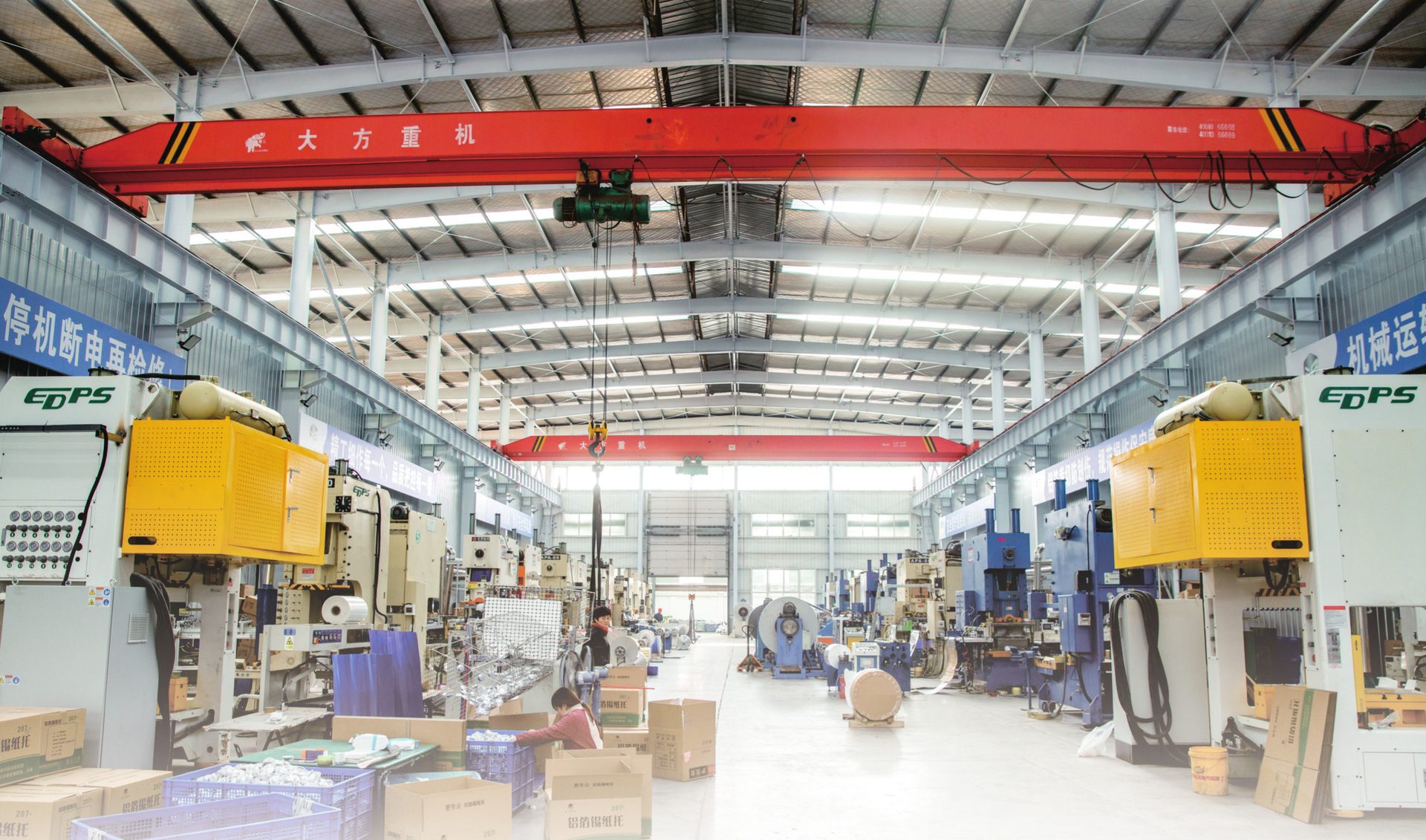
Short answer: Importing empty disposable aluminum foil containers from a China factory is a sequence of specification, samples, a written order, factory production, and destination customs clearance. AILVBO is a manufacturer in Gongyi City, Yong'an Subdistrict, Henan Province, China 451200, in production since 2007, with OEM capability and its own import and export rights.
Published terms include a 50,000-piece MOQ per item (10,000-piece trial for new customers), free existing-model samples (buyer pays freight), FOB Qingdao or Shanghai, T/T 30/70 or L/C at sight, and 15–20 days after deposit for standard production. Empty foil food trays are often classified under HS heading 7615, not heading 7607 (foil rolls or sheets). Heading 7612 can also arise. The national tariff line, duty and any trade remedies must be confirmed with your customs broker. This page does not list prices, ocean transit times, or cartons per container, and it is not a substitute for a binding ruling. It also does not repeat the full MOQ, lead time, sample or custom mold explanations.
1. Freeze the specification before you pay a deposit
Name the article as it will be imported: empty trays or pans, with or without lids, not a filled ready meal. Write the model or the millimetre dimensions, capacity in millilitres, lid type, quantity per model, packing, destination port and trade term. AILVBO publishes food-grade 3003 and 8011 aluminium alloys for the container range. The containers are described as oven-safe to 260°C (500°F) and not for microwave use, and as suitable for freezer storage down to −40°C. If your importer needs food-contact documents, say so in the first message; what is supplied is confirmed with the order, not assumed from a webpage.
Use an AILVBO model when you have one. For Gulf size code 8389, JY-8389 is published at 210×140 mm top out, bottom 174×103 mm, height 45 mm, about 800 ml, packed 1,000 pieces per carton, with aluminium or plastic lids available. A trade code alone can match different heights, so the millimetre dimensions belong on the RFQ. The catalog and RFQ checklist list the remaining fields.
Standard packing is shrink-wrapped in cartons. Carton counts vary by model (JY-G1100 is 500 pieces per carton). Optional PE bags, color boxes, display cartons, palletized shipping and shipping marks should be stated if needed. This website does not publish cartons per 20-foot or 40-foot container; calculate those from the confirmed carton size and packing list.
2. Approve a sample, then place a trial or standard order
Samples of existing products are free; the buyer pays freight. Factory dispatch is 5–7 days. A sample is for checking fit, lid type, packing and food use — not a 10,000-piece market test.
A trial order is the published 10,000-piece quantity for new customers. The standard minimum is 50,000 pieces per item. Custom designs may require a higher minimum, depending on mold complexity. Custom mold development typically takes 15–20 days; custom or OEM production is then 25–30 days after sample-mold approval. Branding and private-label packing are covered on the OEM page.
Prices are quoted FOB Qingdao or Shanghai and are confirmed on the quotation; they are not listed on this website. The published factory lead time for standard products is 15–20 days after deposit. That window does not include international transit, destination handling or customs clearance, and those times are not published as a fixed number.
UAE and Saudi importers can start from the wholesale landing for UAE and Saudi Arabia and, for seasonal peaks, the Ramadan and Eid ordering timeline. An Arabic buying guide is at دليل الشراء.
3. HS classification: 7615, 7612 or 7607
The Harmonized System is a six-digit international nomenclature. National tariffs add further digits, and duty rates and trade remedies are not the same in every country. Confirm the line that will actually be entered with your customs broker. Where the risk or volume justifies it, apply for a binding ruling (a CBP ruling in the United States, Binding Tariff Information in the European Union, or an Advance Tariff Ruling in the United Kingdom).
Three headings come up for this product family:
| Heading | Official description (short) | When it usually arises |
|---|---|---|
| 7607 | Aluminium foil (whether or not printed or backed) of a thickness not exceeding 0.2 mm | The foil itself: rolls and sheets, not a formed tray. AILVBO’s published roll model JY-FR30 (30 cm width, 10 micron, 5 m or 10 m rolls) is this kind of article. |
| 7612 | Aluminium casks, drums, cans, boxes and similar containers, of a capacity not exceeding 300 litres | Commercial conveyance or packing containers. Some national tariffs also have a 7612 line for articles made from foil not exceeding 0.2 mm thick. |
| 7615 | Table, kitchen or other household articles and parts thereof, of aluminium | The heading under which empty disposable foil pans and trays used for cooking, baking, serving or household food storage are often classified. |
The heading texts follow the UK Integrated Online Tariff. In that tariff, heading 7615 includes commodity code 7615 10 30 00, “Manufactured from foil of a thickness not exceeding 0.2 mm.” Heading 7612 also has a foil-thickness line (7612 90 30 00). Those UK codes are examples of a national subdivision. They are not a worldwide 8-digit standard and are not a classification of any AILVBO model.
In the United States, CBP ruling NY N342609 (17 September 2024) classified empty disposable aluminium foil pans with plastic lids, imported from China for food-service use, under HTSUS 7615.10.7125 (containers suitable for food preparation, baking, reheating or storage, 0.04–0.22 mm thick). HQ 952099 (3 February 1993) earlier held that aluminium foil carry-out containers, pizza pans, tart pans, pie plates and roasters used in homes and restaurants are classifiable in heading 7615, not 7612. Those rulings apply only to the merchandise they describe, not to AILVBO’s catalog as a whole. A change in construction, lid, coating or thickness can require a new review.
If the trays arrive already filled with food, the food generally determines classification. Mixed shipments of formed containers and household foil rolls should be identified separately on the invoice and packing list, because they can fall in different headings.
4. Documents that usually travel with the shipment
The exact set depends on the destination. Under 19 CFR 142.3, U.S. entry documentation to secure release generally includes an entry (CBP Form 3461 or its electronic equivalent), evidence of the right to make entry, a commercial invoice, a packing list where appropriate, and any other documents CBP or another agency requires for that shipment. Other destinations use different forms, but the commercial invoice, packing list and transport document (bill of lading or air waybill) are the core set most brokers will ask the seller to prepare carefully.
Keep the same model codes, sizes, lid description, piece counts and carton counts that were agreed on the order. For a published example, an invoice line for JY-8389 should be reconcilable with 1,000 pieces per carton. A certificate of origin is not listed as a mandatory U.S. release document in 19 CFR 142.3; it may still be requested by the destination customs authority or for a preference claim. This page does not invent a document pack for Saudi SABER, UAE clearance, or any other national conformity platform; those requirements must be confirmed locally.
5. Destination duties and trade remedies
This website does not publish duty rates or a landed-cost calculator. Rates change, and a rate quoted in an older ruling can be out of date.
Importers into the United States should be aware that the U.S. Department of Commerce issued antidumping and countervailing duty orders on disposable aluminum containers, pans, trays, and lids from China, effective 8 May 2025 (90 FR 19467; case numbers A-570-170 and C-570-171). The scope covers disposable aluminium containers, pans, trays and lids produced primarily from flat-rolled aluminium, regardless of shape or size. The notice says such merchandise is currently classifiable under HTSUS 7615.10.7125 but may also be entered under other subheadings; the written scope, not the HTSUS number, is dispositive. Current cash-deposit and duty rates must be checked with your broker; this page does not list them.
Buyers in the Gulf and in other markets should likewise ask their broker whether any safeguard, additional duty or local conformity procedure applies to the goods as entered. Factory lead time and FOB Qingdao or Shanghai terms do not change those destination rules.
Frequently asked questions
What HS code is used for disposable aluminum foil containers?
Empty disposable foil trays and pans used as table, kitchen or household articles are often classified in heading 7615. In the United States, CBP has classified described empty foil pans under HTSUS 7615.10.7125. Heading 7612 (aluminium cans, boxes and similar containers) and heading 7607 (aluminium foil) can apply to different articles. The national tariff line must be confirmed with your customs broker. This website does not assign an official HS code to each AILVBO model.
Are aluminum foil rolls classified under the same code as the containers?
Usually not. Heading 7607 covers aluminium foil in the form of rolls or sheets, not a formed tray. AILVBO’s published roll model is JY-FR30. Identify rolls and formed containers as separate lines on the invoice and packing list.
What documents should I prepare to import a shipment?
Plan at least a commercial invoice, a packing list and the transport document. In the United States, 19 CFR 142.3 also requires an entry and evidence of the right to make entry, plus any other agency documents that apply. A certificate of origin or food-contact file may be requested depending on the destination. Match model codes, quantities and carton counts to the confirmed order.
What are AILVBO’s published order terms for an import shipment?
Standard MOQ 50,000 pieces per item; 10,000-piece trial for new customers; free samples of existing products, buyer pays freight, 5–7 days to dispatch; FOB Qingdao or Shanghai; T/T 30/70 and L/C at sight; standard production 15–20 days after deposit; custom mold typically 15–20 days, then 25–30 days of production after mold approval. Prices are not listed on this website.
Do imports of these products from China into the United States face additional duties?
Yes. U.S. antidumping and countervailing duty orders on disposable aluminum containers, pans, trays, and lids from China have been in effect since 8 May 2025. Whether a given shipment is in scope, and what rate applies, must be confirmed with your customs broker against the current official orders. This page does not quote those rates.
Does the 15–20 day lead time include ocean freight and customs clearance?
No. The published 15–20 day figure is factory production after deposit for standard products. It does not include international transit, destination handling or customs clearance, and those times are not published as a fixed number on this website.
Conclusion
The high-risk steps usually happen before the container is booked: a measurable specification, an approved sample, documents that match the packed goods, and a tariff line confirmed by the destination broker — including, for U.S. entries, a check against the 2025 AD/CVD orders. AILVBO’s published factory terms are the China-side half of that path and are confirmed on the quotation.
For published carton counts and FOB packing, see the packing and shipping guide. For lid types to specify with the container, see the lids guide.
Browse the catalog (PDF), use the RFQ checklist, or send the same details via the contact page, email fliany365@gmail.com, or WhatsApp/WeChat +86 15810953132.
Public sources cited
Industry and official sources; these are not AILVBO claims.
- UK Integrated Online Tariff, heading 7615, “Table, kitchen or other household articles and parts thereof, of aluminium…”, including 7615 10 30 00 “Manufactured from foil of a thickness not exceeding 0.2 mm” (date of trade 16 November 2026): https://www.trade-tariff.service.gov.uk/headings/7615
- UK Integrated Online Tariff, heading 7612, including 7612 90 30 00 “Manufactured from foil of a thickness not exceeding 0.2 mm”: https://www.trade-tariff.service.gov.uk/headings/7612
- UK Integrated Online Tariff, heading 7607, “Aluminium foil … of a thickness (excluding any backing) not exceeding 0.2 mm”: https://www.trade-tariff.service.gov.uk/headings/7607
- U.S. Customs and Border Protection, ruling NY N342609 (17 September 2024), classification of empty disposable aluminum foil pans with lids from China under HTSUS 7615.10.7125: https://rulings.cbp.gov/ruling/N342609
- U.S. Customs Service, HQ 952099 (3 February 1993), holding that aluminum foil carry-out containers, pans and roasters used for cooking, kitchen or household food storage are classifiable in heading 7615, not heading 7612: https://rulings.cbp.gov/ruling/952099
- Harmonized Tariff Schedule of the United States (current official text and duty rates): https://hts.usitc.gov/
- 19 CFR 142.3, “Entry documentation required” (entry, right to make entry, commercial invoice, packing list where appropriate, other required documents): https://www.ecfr.gov/current/title-19/chapter-I/part-142/subpart-A/section-142.3
- U.S. Department of Commerce, International Trade Administration, “Disposable Aluminum Containers, Pans, Trays, and Lids From the People’s Republic of China: Antidumping and Countervailing Duty Orders,” 90 FR 19467 (8 May 2025), dockets A-570-170 and C-570-171: https://www.federalregister.gov/documents/2025/05/08/2025-08089/disposable-aluminum-containers-pans-trays-and-lids-from-the-peoples-republic-of-china-antidumping
- European Commission, Binding Tariff Information (BTI) overview, for EU importers seeking a binding classification: https://taxation-customs.ec.europa.eu/online-services/online-services-and-databases-customs/european-binding-tariff-information-ebti_en