Can You Put Aluminum Foil Containers in the Microwave?
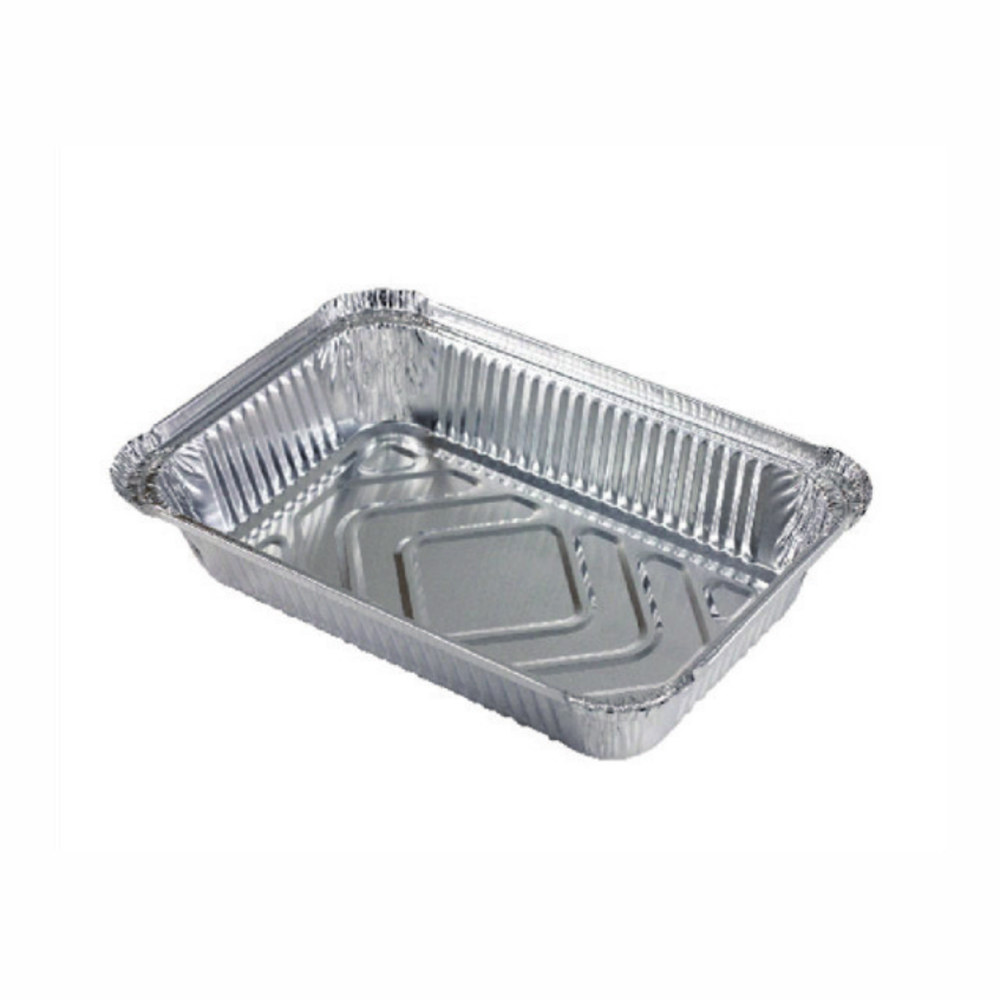
Quick answer
No. AILVBO disposable aluminum foil food containers must not go in a microwave.
The containers are made of metal. As already stated on the FAQ, the complete foil container guide and the food-safety article, aluminum containers should not be used in microwave ovens because metal can cause arcing (electrical sparks). That can damage the appliance and create a fire hazard. Transfer the food to a microwave-safe dish, then reheat the food in that dish.
The same trays can go in a conventional or convection oven up to 260°C (500°F). If you have an oven, keep the food in the foil container and follow the oven guide.
There is no published AILVBO model exception. Rectangular, round, oval, airline, specialty and coated trays in the current catalog are all aluminum foil containers, and all of them must stay out of the microwave.
Why foil trays must stay out of the microwave
A microwave oven heats food with microwave energy. A disposable aluminum foil container is a metal tray. Live AILVBO pages already give the practical reason to keep the two apart: metal can cause arcing — visible electrical sparks — inside the appliance.
The food-safety article puts it this way: aluminum foil containers must never be used in microwave ovens; metal causes arcing (electrical sparks) that can damage the appliance and start fires; always transfer food to a microwave-safe container for reheating. The complete foil container guide uses the same rule: the trays are not microwave safe, and food should be moved to a microwave-safe container before reheating.
The foil versus paper comparison already notes a related point from the U.S. Food and Drug Administration: microwaves are reflected by metal and pass through paper, which is why a metal tray and a paper tray behave differently in a microwave (FDA, Microwave Ovens). This article does not add lab tests, injury statistics or any FDA wording beyond that already published point.
AILVBO does not publish a “safe” microwave time, power level or “short burst” exception for its disposable foil containers. Do not treat low power, a short cycle, or a tray that is only partly filled as a workaround.
The oven guide includes a general caution: treat foil containers as not microwave-safe unless the container maker explicitly says otherwise. That sentence is a reminder to read the maker’s own instructions. It is not a claim that AILVBO makes a microwave-safe disposable foil tray. For AILVBO’s published catalog, the instruction is the same as the FAQ: do not use these aluminum containers in a microwave.
What to do instead
There are two published, practical options, depending on the appliance you actually have.
If the food will be reheated in a microwave: take the food out of the foil container first. Move it into a dish or pack that the dish maker rates as microwave-safe. Reheat the food in that dish. Keep the foil tray, and any metal lid, out of the microwave cavity. This is the method already recommended on the FAQ, the homepage, the contact-page FAQ, the complete guide and the food-safety article.
If you have a conventional or convection oven: you can leave the food in the AILVBO foil container. The trays are oven-safe up to 260°C (500°F). Take off any plastic or paperboard lid before the container goes into the oven. Put the container on a baking tray. The step-by-step oven rules, including fan, gas, countertop and freezer-to-oven use, stay on the oven guide. This page does not repeat those tables.
If a site only has a microwave, the foil tray is still useful for packing, transport, cold storage and oven use elsewhere. It is not the reheating vessel for that microwave.
Oven or microwave: which page to use
These two questions are easy to mix up, and they have opposite answers for AILVBO trays.
| Question | AILVBO disposable foil containers | Where to read more |
|---|---|---|
| Can they go in a conventional or convection oven? | Yes, up to 260°C (500°F). | Oven guide |
| Can they go in a microwave? | No. Transfer the food first. | This page |
| Can they go from freezer to oven in the same tray? | Yes. Remove non-aluminum lids and allow extra heating time. | Oven guide and FAQ |
| Can they go from freezer or fridge to a microwave in the same tray? | No. Transfer the food to a microwave-safe dish first. | This page |
| Are they safe for food contact when used as intended? | Yes, when they are food-grade and used in the published temperature range, which does not include microwave use. | Food-safety article |
Air-fryer, grill and broiler practice also belongs on the oven guide, not here.
Notes for restaurants, takeout and meal-prep buyers
Many foodservice buyers choose foil trays because the same pack can hold a hot dish, go into a chiller or freezer, and later go into an oven. That is a real advantage, and it is already described on the FAQ and the oven guide. It does not make the tray microwave-safe.
The practical risk is usually at the next step, after the pack leaves the kitchen. Customers, office staff or a satellite pantry may only have a microwave. If they put the foil tray straight in, they are not following the published use rule.
If your customers are likely to reheat leftovers in a microwave, a short instruction helps: do not put the aluminum foil tray in the microwave; transfer the food to a microwave-safe dish, or reheat it in a conventional oven. This page does not invent a standard on-pack warning, a printed lid text, or a claim that every AILVBO lid already carries that wording. If you want a reheating note on the pack or lid, raise it when you request a quote. Lid types and what is already published about them are on the lids guide.
If microwave reheating in the pack itself is a must-have for the channel, foil is the wrong material for that step. The foil versus plastic and foil versus paper pages already say that some plastic or paper packs may be used in a microwave when the pack maker allows it, while AILVBO foil containers must not. Those comparisons are the place to weigh that trade-off, including oven use, grease and recycling. This page does not retell those tables.
Common takeout and catering shapes are listed under rectangular, round and oval containers. JY-8389, a 210×140×45 mm, 800 ml rectangular tray, is one published example used in takeaway and catering. The microwave rule is the same for that model as for the rest of the catalog.
Airline and catering trays
Airline foil containers are still aluminum. The oven guide already describes them as trays for in-flight meals that are reheated in galley ovens. Galley oven use is not microwave use.
Do not put A169, A185, JY-A135 or other published airline trays in a microwave. If a ground kitchen, cabin-service test or pantry only has a microwave, transfer the food to a microwave-safe dish first. For sizing and sourcing of airline trays, use the airline foil container manufacturer guide and the airline category. This page does not invent airline-specific microwave policies.
The same rule applies to other catering and specialty trays: if the pack is an AILVBO disposable aluminum foil container, it stays out of the microwave.
Lids and covers
The microwave rule is about the metal container. Taking the lid off does not make the foil tray microwave-safe.
The lids guide already states that AILVBO containers are not for microwave use, and that AILVBO does not publish microwave ratings for cardboard lids or plastic (PET/PP) lids. This article does not add softening points or microwave limits for those lids.
For oven use, the published rule is unchanged: remove paperboard and plastic dome lids before baking; an aluminum lid may stay on. Those details stay on the lids guide and the oven guide.
For microwave reheating, move the food to a microwave-safe dish and use a cover meant for that dish, not the foil tray and not an assumed rating for an AILVBO cardboard or plastic lid.
From the freezer or fridge to a microwave
AILVBO foil containers are freezer-safe down to −40°C (−40°F). The FAQ states that they provide protection against freezer burn and moisture loss, that aluminum or plastic lids can be used for secure freezer storage, and that containers can go directly from freezer to oven. For packing, lids, storage times and thawing, see can you freeze aluminum foil containers?
Freezer-to-oven is not freezer-to-microwave. If you will reheat from frozen or chilled in a microwave, transfer the food to a microwave-safe dish first. If you will reheat in a conventional oven, you can keep the food in the foil container: remove non-aluminum lids, place the container on a tray, and allow extra heating time, as the oven guide already describes.
Frequently asked questions
Can you put disposable aluminum foil food containers in the microwave?
No. AILVBO disposable aluminum foil containers must not go in a microwave. Transfer the food to a microwave-safe dish first.
Why can’t foil trays go in the microwave?
They are metal. Live AILVBO pages state that metal can cause arcing (electrical sparks), which can damage the appliance and create a fire hazard. The foil versus paper comparison also notes the FDA point that microwaves are reflected by metal.
Are any AILVBO models microwave-safe?
No. There is no published model-specific exception. The prohibition applies to the disposable aluminum foil containers in the current catalog, including coated or airline trays.
What should I do if I only have a microwave?
Move the food out of the foil container and into a microwave-safe dish, then reheat the food in that dish. Keep the foil tray out of the appliance.
Can I reheat the same tray in an oven instead?
Yes. AILVBO disposable aluminum foil containers are safe in conventional and convection ovens up to 260°C (500°F). Remove plastic or paperboard lids first. See the oven guide.
Can food stored or frozen in a foil container be microwaved later?
The food can be microwaved after you transfer it to a microwave-safe dish. The foil container itself must stay out of the microwave. The same container may go from freezer to oven.
Can the lid go in the microwave?
Do not put the foil container in the microwave, with or without a lid. AILVBO does not publish microwave ratings for cardboard or plastic lids. Use a microwave-safe dish and a cover meant for that dish.
Are aluminum foil containers safe for food if I use them in the oven, not the microwave?
Yes, when they are food-grade and used as published, including the 260°C oven limit. That is covered in the food-safety article and the FAQ. This page does not repeat those safety myths or certification tables.
Conclusion
Disposable aluminum foil food containers are a good fit for oven heating, hot hold, transport and freezer-to-oven use. They are the wrong pack to put in a microwave.
For AILVBO trays the rule is simple: do not place the container in a microwave; transfer the food to a microwave-safe dish, or reheat it in a conventional or convection oven up to 260°C (500°F). Send the model, quantity, destination port, lid and packing needs through the RFQ checklist, or use the contact page.
AILVBO manufactures in Yong’an Subdistrict, Gongyi City, Henan, China. Email fliany365@gmail.com or message WhatsApp +86 15810953132.
Sources
Facts on this page come from AILVBO pages already published on this website. No lab tests, medical claims, prices or model-specific microwave exceptions are added.
- https://www.ailvbo.com/faq/ — “Are the containers safe for oven and microwave use?”: safe in conventional and convection ovens up to 260°C (500°F); aluminum containers should NOT be used in microwave ovens as metal can cause arcing; transfer food to microwave-safe containers. Also freezer-safe to −40°C, freezer-to-oven, and contact details. The same oven-and-microwave wording appears on the homepage FAQ and https://www.ailvbo.com/contact/
- https://www.ailvbo.com/blog/can-you-put-aluminum-foil-containers-in-oven/ — oven-safe to 260°C (500°F); microwave row “No — metal can cause arcing; move food to a microwave-safe dish”; general “unless the container maker explicitly says it is microwave-safe” caveat; lid, freezer-to-oven and airline galley-oven notes; JY-8389 as a Gulf-market takeaway/catering size.
- https://www.ailvbo.com/blog/are-aluminum-foil-containers-safe/ — critical safety note: must never be used in microwave ovens; arcing can damage the appliance and start fires; always transfer food to a microwave-safe container. Temperature range −40°C to 260°C.
- https://www.ailvbo.com/aluminum-foil-containers-guide/ — “NOT microwave safe”; metal causes arcing and a fire hazard; transfer to a microwave-safe container before reheating.
- https://www.ailvbo.com/compare/aluminum-foil-vs-paper/ — foil must not go in a microwave; FDA note that microwaves are reflected by metal and pass through paper (FDA, Microwave Ovens).
- https://www.ailvbo.com/compare/aluminum-foil-vs-plastic/ — microwave row: foil “No — metal causes arcing”; some PP/CPET plastics may be microwave-safe.
- https://www.ailvbo.com/blog/aluminum-foil-container-lids/ — container is not for microwave use; no published microwave ratings for cardboard or plastic lids; published oven lid rules only.
- https://www.ailvbo.com/products/jy-8389/ and the FAQ JY-8389 line — 210×140×45 mm, 800 ml, published Gulf 8389 size. Used only as an example, with no microwave exception.