Can You Freeze Aluminum Foil Containers? Freezer Guide
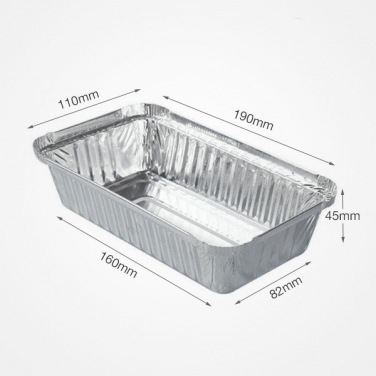
Short answer: Yes. AILVBO publishes its aluminum foil food containers as freezer-safe down to -40°C (-40°F), and the same container can go from the freezer straight into a conventional oven up to 260°C (500°F). Use an aluminum lid, or a plastic lid for freezer storage, to protect food from freezer burn and moisture loss. Remove plastic or cardboard lids before the oven. Do not put a foil container in a microwave, even to defrost; move the food to a microwave-safe dish first.
This page answers the freezer questions buyers and cooks ask most: whether foil trays are freezer safe, how to fill and seal them, how long food keeps, how to thaw and reheat, and which AILVBO models with published lids suit freezer meal programs. The container facts come from AILVBO’s own published pages. The food-storage guidance comes from the U.S. Department of Agriculture’s Food Safety and Inspection Service (USDA FSIS) page Freezing and Food Safety. Nothing here adds prices, unit weights or lid matches that a product page does not list.
Are aluminum foil containers freezer safe?
Yes. The AILVBO FAQ states that its foil containers withstand temperatures from -40°C (-40°F) for freezer storage up to 260°C (500°F) for oven baking and roasting, and that they can be used with aluminum or plastic lids for freezer storage. The containers are made from food-grade 3003 or 8011 aluminum alloy.
USDA FSIS says food stored constantly at 0°F (-18°C) will always be safe, and that only the quality suffers with lengthy freezer storage. A normal commercial or home freezer at 0°F (-18°C) is well within the -40°C published limit for the containers.
| Step | Foil container | What to do |
|---|---|---|
| Freezer storage | Yes, to -40°C (-40°F) | Seal with an aluminum or plastic lid |
| Freezer to oven | Yes, up to 260°C (500°F) | Remove plastic or cardboard lids; add heating time |
| Thaw in the fridge | Yes | Keep the lid on; put the tray on a plate or shelf tray |
| Microwave defrost or reheat | No | Move the food to a microwave-safe dish first |
How to freeze food in foil containers
- Freeze promptly. USDA FSIS advises freezing food as fast as possible to keep its quality, and not refreezing any food left outside the refrigerator for more than 2 hours (1 hour above 90°F). Do not leave filled trays standing at room temperature.
- Seal against air. FSIS explains that freezer burn is caused by air reaching the food surface. It does not make food unsafe, but it leaves dry, grayish-brown spots. A crimped aluminum lid or a fitted plastic lid limits that contact.
- Leave headspace for liquids. Soups, sauces and stews expand as they freeze. AILVBO’s oven guide already recommends at least 2–3 cm (about 1 inch) of headspace for liquid dishes, which also helps when the frozen tray goes into the oven.
- Freeze in one layer, then stack. FSIS recommends spreading packages out in one layer to freeze, and stacking them only after they are frozen solid. Rapid freezing gives smaller ice crystals and better texture.
- Label each tray. Write the dish and date on the lid. A printable cardboard lid is a branding option, but it must be removed before baking; see the lids guide.
- Limit long contact with acidic or salty food. The oven guide notes that cooking and short-term storage are fine, but very acidic or salty foods such as tomato sauce or pickles kept in direct contact with bare aluminum for days can mark the foil.
How long does food keep in the freezer?
USDA FSIS notes that freezing keeps food safe almost indefinitely, so recommended times are for quality only. Its freezer storage chart at 0°F includes these items that are often packed in foil trays:
| Food (USDA FSIS chart, 0°F) | Best-quality time |
|---|---|
| Casseroles | 2 to 3 months |
| Frozen dinners and entrees | 3 to 4 months |
| Soups and stews | 2 to 3 months |
| Meat, cooked | 2 to 3 months |
| Poultry, cooked | 4 months |
| Gravy, meat or poultry | 2 to 3 months |
How to thaw and reheat food from a foil container
FSIS lists three safe ways to thaw food: in the refrigerator, in cold water, or in the microwave. With a foil container, only the first two keep the food in the tray. A foil container must not go in a microwave, so if you want to defrost by microwave, move the food to a microwave-safe dish first. The reasons are explained in can you put aluminum foil containers in the microwave?
You can also reheat straight from frozen. FSIS says raw or cooked meat, poultry or casseroles can be cooked or reheated from the frozen state, taking about one and a half times as long. AILVBO’s oven guide gives the container steps: take off paperboard or plastic lids, cover with an aluminum lid or foil if you want to keep moisture in, add heating time, and place the frozen container on a tray so the thin walls do not bend when you lift it. Do not exceed 260°C (500°F).
Which lids work in the freezer?
| Lid type | Freezer | Oven |
|---|---|---|
| Aluminum foil lid | Yes, listed for freezer storage | Yes; can be crimped on to keep moisture in |
| Plastic lid | Yes, listed for freezer storage | No; remove before baking |
| PET dome lid | For cold storage and display | No; remove before baking |
| Cardboard lid (printable) | Ask on the quotation | No; remove before baking |
AILVBO does not publish a single list of which lid types are tooled for every model. Name the model and the lid type on your request and ask for the match to be confirmed. Lids are usually quoted as a separate line from the container.
Foil containers for frozen meal programs
Caterers, meal-prep brands and frozen ready-meal producers use foil because one container covers filling, sealing, freezing, shipping and oven reheating. These published AILVBO models list a lid as available. Figures are copied from each product page.
| Model | Top out | Height | Capacity | Packing | Typical published use |
|---|---|---|---|---|---|
| JY-R175 | 175×110 mm | 40 mm | 400 ml | 1,000 pcs | Standard meal portions, takeout, home meal prep |
| JY-R190 | 190×110 mm | 45 mm | 500 ml | 1,000 pcs | Takeout meals, catering, delivery |
| JY-R165 | 165×130 mm | 45 mm | 550 ml | 1,000 pcs | Various meal types |
| JY-R180 | 185×135 mm | 50 mm | 700 ml | 1,000 pcs | Full meal portions, takeout, catering |
| JY-8389 | 210×140 mm | 45 mm | 800 ml | 1,000 pcs | Takeout and catering; aluminum or plastic lids |
| JY-G1100 | 230×170 mm | 45 mm | 1,100 ml | 500 pcs | Catering, baking, large portions |
| JY-3C | 230×180 mm | 40 mm | 3 compartments | 1,000 pcs | Meal prep with a main dish and two sides |
| JY-4C | 230×180 mm | 40 mm | 4 compartments | 1,000 pcs | Bento-style and multi-dish meals |
| JY-R7 | Φ185 mm | 45 mm | 720 ml | 500 pcs | Described as sturdy enough for oven and freezer use |
For more shapes, see rectangular aluminum foil containers and round aluminum foil containers. Compartment capacities are not published for JY-3C and JY-4C; ask for them on the quotation.
Ordering freezer-ready foil containers
The terms below are the same ones published on the MOQ, samples and lead time pages. Final figures are confirmed on each quotation. This website does not list prices.
| Term | What AILVBO publishes |
|---|---|
| Minimum order | 50,000 pieces per model |
| Trial order | 10,000 pieces, for new customers |
| Samples | Free for existing models; the buyer pays freight |
| Production | 15–20 days after deposit for standard models |
| Custom mold | 15–20 days for the mold, then 25–30 days of production |
| Shipping | FOB Qingdao or FOB Shanghai |
| Payment | T/T 30% deposit and 70% balance, or L/C at sight |
A good way to test a frozen-meal line is to sample two or three existing models with the lid you plan to use, run your own fill, freeze and reheat cycle, and then place a trial order. When you send an RFQ, say that the containers will be frozen and then reheated in an oven, which lid type you need, and how many lids per container.
Frequently asked questions
Can you freeze aluminum foil containers?
Yes. AILVBO publishes its foil containers as freezer-safe down to -40°C (-40°F). Seal them with an aluminum or plastic lid to limit freezer burn and moisture loss.
Can foil containers go from the freezer straight into the oven?
Yes. The containers can go directly from freezer to oven, up to 260°C (500°F). Remove plastic or cardboard lids first, add heating time, and set the frozen tray on a baking sheet.
Can I defrost a foil container in the microwave?
No. Do not put a foil container in a microwave. Move the food to a microwave-safe dish, or thaw it in the refrigerator.
How long can food stay frozen in a foil tray?
USDA FSIS says food kept constantly at 0°F stays safe, and storage times are for quality. Its chart lists casseroles at 2 to 3 months and frozen dinners and entrees at 3 to 4 months.
Do foil containers prevent freezer burn?
Freezer burn is caused by air reaching the food. A well-sealed aluminum or plastic lid limits that contact; AILVBO’s FAQ says foil containers provide excellent protection against freezer burn and moisture loss.
Which lids can go in the freezer?
Aluminum lids and plastic lids are both listed for freezer storage. Only aluminum lids can stay on in the oven.
Which AILVBO containers suit frozen meal prep?
Rectangular models such as JY-R175, JY-R190, JY-R165, JY-R180, JY-8389 and JY-G1100, and the JY-3C and JY-4C compartment trays, all list a lid as available.
What is the minimum order for foil containers?
The standard MOQ is 50,000 pieces per model, with a 10,000-piece trial order for new customers. Samples of existing models are free; the buyer pays freight.
Conclusion
Aluminum foil containers suit freezer use: AILVBO publishes them as freezer-safe to -40°C and oven-safe to 260°C, so one tray can be filled, sealed, frozen and reheated. AILVBO has manufactured aluminum foil containers in Gongyi, Henan since 2007, holds ISO, FDA, SGS and BRC certifications, runs a 25,000 m² factory with 200M+ pieces of annual capacity, and serves buyers in 60+ countries. To request samples or a quote for freezer-ready containers, use the contact page, email fliany365@gmail.com, or message WhatsApp +86 15810953132.
Sources
Container temperature limits, lid rules and order terms come from AILVBO pages already published on this website (FAQ, oven guide, lids guide, MOQ, samples and lead time pages). Specifications are copied from each product page. Food storage, freezer burn, thawing and storage-time guidance comes from USDA FSIS: